

What is the Difference Between Electric Stacker and Forklift?
04 Mar 2026
If you’ve ever walked into a warehouse or distribution center, you’ve likely seen a variety of machines lifting and moving goods. Two of the most common are electric stackers and forklifts. While they may look similar at a quick glance, their purpose, design, and operational capabilities differ significantly. Understanding these differences can help businesses choose the right equipment for their needs, optimize workflow, and cut unnecessary costs. Let’s break it down clearly and practically.
What Is an Electric Stacker?
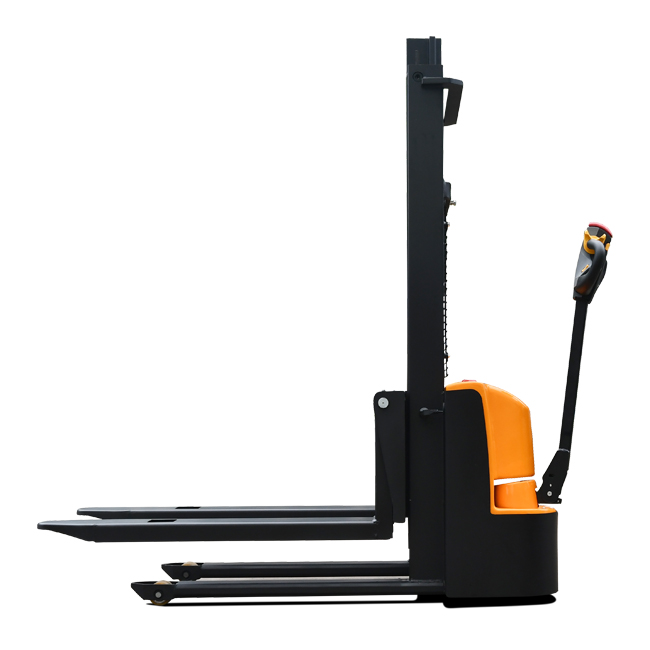
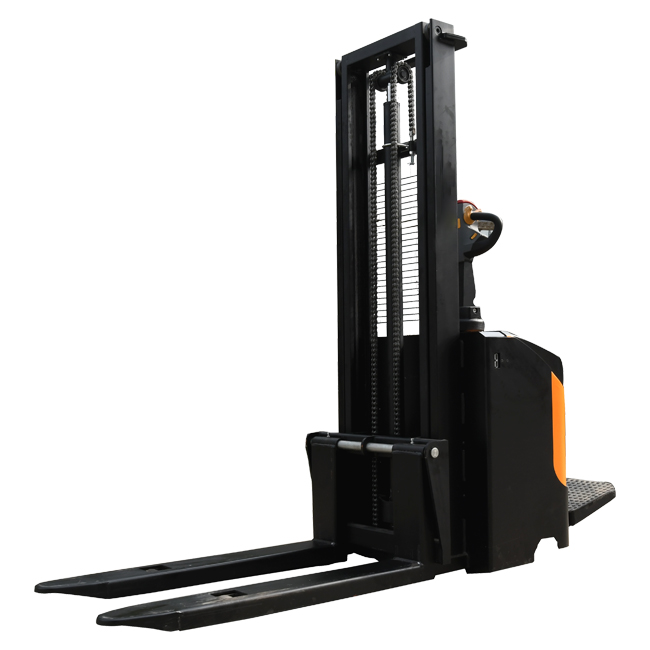
Electric stackers are specialized material handling machines designed to lift and move pallets and goods over short distances. Unlike forklifts, stackers are more compact, lighter, and often pedestrian-operated — meaning the operator walks behind or stands on a small platform to control the machine.
Design and Structure of Electric Stackers
Electric stackers have a slender body with a mast and forks that lift pallets. They are much smaller in size compared to traditional forklifts, which allows them to operate in tight aisles and confined warehouse spaces. Their design focuses on maneuverability rather than power.
How Electric Stackers Operate
Most electric stackers are battery-powered and use an electric motor to drive both the wheels and lifting mechanism. Operators typically guide them using a tiller or stand-on platform, making them suitable for environments with limited space.
Common Use Cases for Electric Stackers
Electric stackers are ideal for environments such as small warehousing zones, retail stockrooms, light manufacturing floors, and indoor areas where space is at a premium. They excel at stacking pallets to moderate heights — often sufficient for second-tier racking systems.
What Is a Forklift?
A forklift is a powered industrial truck designed to lift, carry, and transport materials over short to long distances. They are widely used across warehouses, construction sites, manufacturing plants, and logistics hubs. Forklifts come in multiple configurations, including electric, gas, and diesel variants.
Design and Structure of Forklifts
Forklifts have a robust frame with a mast, counterweight, and operator cab. The counterweight at the rear balances the load on the forks, providing stability for heavier operations. Electric forklifts use large battery packs, often integrated into the vehicle’s body.
How Forklifts Operate
Forklift operators sit in a cab with a steering wheel and controls that operate the lift and travel functions. These machines can travel further and faster than stackers and handle different terrains, especially outdoor settings with uneven ground.
Common Use Cases for Forklifts
Forklifts are versatile and suited for high-volume warehouse operations, heavy and bulky load handling, loading and unloading trucks, and outdoor logistics. They are the backbone of most medium- and large-scale material handling operations.
Key Differences Between Electric Stackers and Forklifts
Understanding the specific differences helps when selecting the right machine for your workflow. Here are the main points of comparison:
Size and Maneuverability
Electric stackers are smaller, lighter, and easier to turn around tight corners than forklifts. This makes them a smart choice for narrow aisles and confined spaces where large machinery simply won’t fit. Conversely, forklifts require wider aisles to operate safely.
Load Capacity
Stackers usually handle lighter to medium loads, commonly in the range of about 1–2 tons (900–2,000 kg). Forklifts, on the other hand, can lift much heavier loads — often 3 tons and above, with heavy-duty models capable of lifting several tons.
Lifting Height
Electric stackers are designed to stack pallets at moderate heights, typically adequate for standard warehouse shelving. Forklifts, especially with extended masts, can lift loads to significantly greater heights — sometimes exceeding 9 meters (30 feet).
Power Source
Electric stackers operate exclusively on battery power. Forklifts are more versatile: they can be powered by electricity, gas, diesel, or LPG. This means forklifts can operate both indoors (electric models) and outdoors (fuel-powered models).
Operator Position and Control
Stackers are usually pedestrian-controlled or have a small stand-on platform. In contrast, forklifts typically feature a seated operator cab with ergonomic controls, which can reduce operator fatigue during long shifts.
Cost and Maintenance
Electric stackers are generally more affordable upfront and cheaper to maintain due to fewer moving parts and smaller batteries. Forklifts, while more costly, offer greater power and durability for heavy-duty tasks.
Training and Certification Requirements
Because of their size and complexity, forklifts often require formal operator certification or a licence in many regions. Electric stackers typically require less rigorous training, though safe operation training is still essential.
Indoor vs Outdoor Suitability
Electric stackers are ideal for indoor environments with smooth floors. Standard forklifts — especially those powered by gas, diesel, or designed with rugged tires — can work outdoors and on uneven terrain.
When to Use an Electric Stacker
Electric stackers are a strategic choice when your operation involves:
-
Warehouses with narrow aisles and limited space
-
Moderate stacking heights (e.g., up to 4.5 meters)
-
Lighter payloads and frequent pallet repositioning
-
Lower equipment investment and operational costs
-
Indoor environments where noise and emissions need to be minimal
In these scenarios, stackers increase efficiency without unnecessary cost or workspace disruption.
When to Use a Forklift
A forklift becomes the better option when your operations require:
-
Handling heavy loads exceeding stacker capacity
-
Stacking at greater heights
-
Moving goods over longer distances within large facilities
-
Outdoor operations or uneven surfaces
-
Versatility with attachments for different material types
Forklifts deliver the power and adaptability that high-volume operations demand.
Although electric stackers and forklifts both support material handling, they serve different operational needs. Electric stackers are compact, cost-efficient, and perfect for light to medium indoor tasks, especially in tight spaces. Forklifts, with higher power output and versatility, excel in heavy-duty operations and larger workflows.
Choosing the right equipment isn’t about one being “better” than the other — it’s about matching capabilities to workflow needs.
5 FAQs
1. Can an electric stacker replace a forklift?
Not entirely — while ideal for lighter indoor tasks, stackers lack the load capacity and lifting heights required in heavier applications.
2. Do I need a licence to operate an electric stacker?
In many regions, electric stackers require basic safety training, but they often don’t require the same formal forklift licence as a forklift.
3. Which is better for a small warehouse?
Electric stackers are typically better due to their compact size and lower cost.
4. Can forklifts be used outdoors?
Yes — especially models powered by diesel or gas designed for uneven terrain.
5. Are electric stackers more energy-efficient than forklifts?
Yes, they typically use smaller battery systems, consume less energy, and cost less to operate.
Hot Products
Do Electric Pallet Jacks Require Certification?
Are Electric Pallet Jacks Safe?
Are Electric Pallet Jacks Worth It?

Does Reach Truck Need a License?