
Forklift Floor Loading: What Your Slab Can Take
23 Oct 2026
Forklift floor loading comes down to one quantity that rarely appears on a specification sheet: the load carried by a single wheel, not the gross weight of the truck. Two machines of similar capacity can place very different demands on a slab depending on mass distribution and how much rubber meets the surface. The sequence worth following runs from a wheel-load estimate, to the rated capacity of the floor, to a comparison with a margin you can defend.
The step is skipped because it falls between two job descriptions. Purchasing reads the specification sheet, the facilities team reads drawings, and nobody connects them, so a truck is ordered on capacity and aisle width and works on a slab whose capacity was never considered.
Three quantities get confused here, and only one describes the floor. Gross vehicle weight is machine plus battery or fuel plus operator, which matters for transport, not slabs. A forklift is considered heavy equipment for that reason, yet the total does not describe the floor. The number governing floor behaviour is the load at each wheel, because a slab responds to a point load and to the area over which it is applied.
Distributed capacity and point load capacity use different units and are not interchangeable. A floor rated in kilonewtons per square metre describes how much can be spread across an area, which suits palletised storage and racking calculations. A wheel concentrates the same mass into a patch the size of a hand, and that localised pressure produces punching shear and surface failure. A document quoting only the distributed figure leaves the real question unanswered.

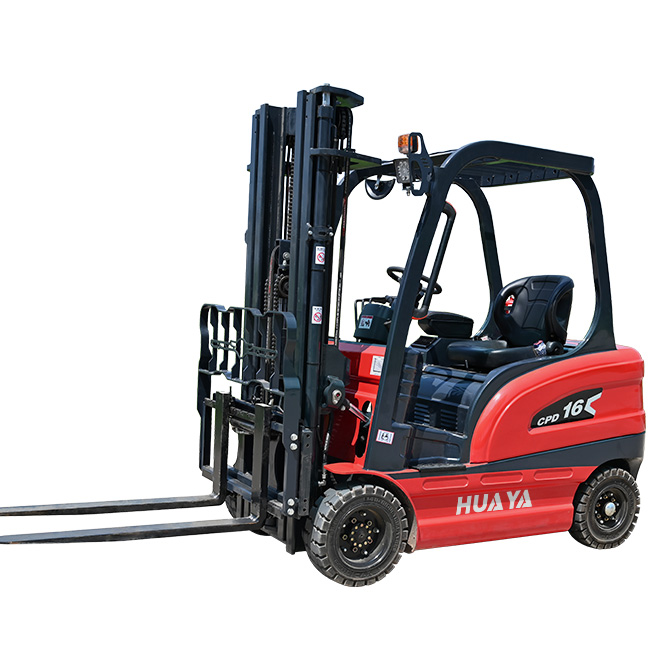
Estimating wheel load starts with where the mass sits. Published tables, such as the CPD35 warehouse electric forklift figures, give unladen weight, wheelbase and rated capacity. A counterbalance truck carries battery and counterweight at the rear and the load at the front, so a laden machine puts most of its weight through the front axle, adding to that share as load centre moves away from the fork face.
Tyre choice changes the result on the same truck. The forklift tires guide explains the handling differences between pneumatic, cushion and solid types. For floors, what counts is contact area: pneumatic tyres present a larger, softer patch, whereas cushion and solid tyres concentrate the same load into a smaller area and transmit it more directly into the slab.
The rated capacity of your floor has an owner, and it is not the internet. Original structural drawings give slab thickness, reinforcement and design load, which is the primary evidence. The owner or landlord holds those drawings, and a lease should state what loading was agreed. Where drawings are missing, or the slab has been cut or overlaid since, a qualified structural engineer can assess it directly.

Three traps catch buyers reading a standard value off a drawing. The first is applying a distributed figure as if it answered a point-load question, which understates the local effect. The second is trusting a thickness recorded before a renovation, since a 200 mm slab is a typical reference rather than a guarantee about your building. The third is ignoring joints, usually the first places to show distress.
Four situations deserve written confirmation before a truck is ordered. A mezzanine or upper floor is the most demanding, because the slab was designed for storage rather than a concentrated moving load with vibration. Older industrial buildings often have thinner slabs and unknown reinforcement. A leased warehouse puts loading limits in a contract to read before signature. Routine overload operation raises wheel loads beyond anything the specification suggests.

When the floor is the constraint, capacity is not the only lever. One class lower reduces mass directly, while a tyre with a larger contact patch spreads the same load over more area, and matching capacity to the real heaviest pallet keeps the envelope honest.
A five-question check before the order covers most of the risk. A route can be wide enough for the truck and still too weak for it, a separate question from warehouse aisle width and layout. What is the slab type and thickness, and are drawings available? What distributed load was the floor designed for? Is any part of the route on a mezzanine? What is the heaviest single pallet, at what load centre? And who signs the confirmation, on which document?
Send HUAYA your floor condition, heaviest load and planned route, and we can help frame the wheel-load estimate and the truck specification that fits it. Share whatever drawings you hold through our contact page, even if they are incomplete. The judgement on structural adequacy belongs to a qualified structural engineer who has inspected the building, and our role is to supply accurate inputs.

Hot Products

New Forklift Delivery: An Acceptance Checklist
Washdown Forklifts: A Guide for Food and Beverage Plants

How Many Forklifts Do You Need? A Fleet Planning Guide
Warehouse Aisle Width and Layout: A Forklift Guide


