
Importing a Forklift from China: A Buyer’s Checklist
06 Nov 2026
Importing a forklift from China is usually priced on the machine and decided on the machine, which is why the first surprise arrives at the destination port. Landed cost is the only figure worth comparing: the truck, freight, destination port charges, clearance, inland delivery, and the time the whole chain consumes. Two suppliers quoting the same machine can land it at very different totals, and the difference rarely sits in the unit price.
The lowest quote is often the most expensive, because the quotes are not on the same basis. One may be ex-works, another FOB, another delivered, and comparing them directly is comparing three different deals. The confusion starts earlier, where guidance on where to buy an electric forklift for a warehouse and on finding a reliable diesel forklift dealer describe two different starting points. Fix the terms and fix what each offer includes before any number is discussed.
The trade term decides where risk changes hands. Under FOB the seller’s responsibility ends when the machine is on board; under CIF freight and insurance are arranged by the seller while risk still passes at shipment; under DAP the seller carries it to the named destination. These are public trade conventions rather than legal advice, and the contract with a licensed forwarder settles the detail. Choose the term by asking who controls each leg.
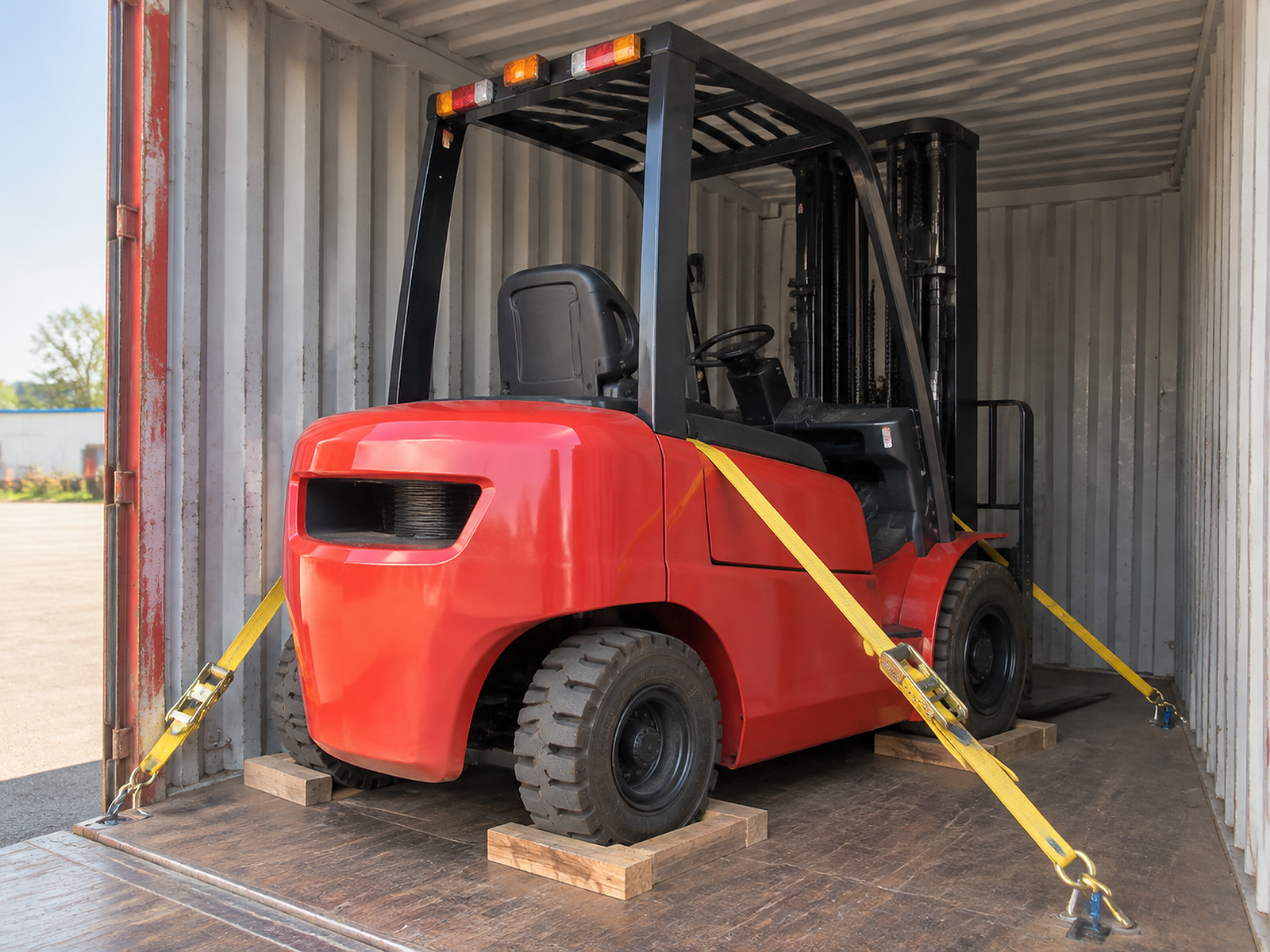
Before terms, check that the machine fits the box. Container type, internal dimensions and the height of the mast or overhead guard decide whether the truck ships assembled or partly broken down, and how many units travel in one container. A counterweighted truck loaded into a general container also needs its load spread and secured for a sea voyage, a different exercise from forklifts for container loading at your own dock. Confirm per model rather than by capacity class.
Protection in transit is where cheap packing becomes visible. Wheels are chocked and the frame strapped to lashing points, the carriage is blocked so it cannot travel on the mast, and hydraulic rod surfaces are wrapped rather than left exposed. Painted faces are protected against chafing, and bare steel receives a rust preventive suited to weeks of humid air. Ask what the packing specification includes before it is built.
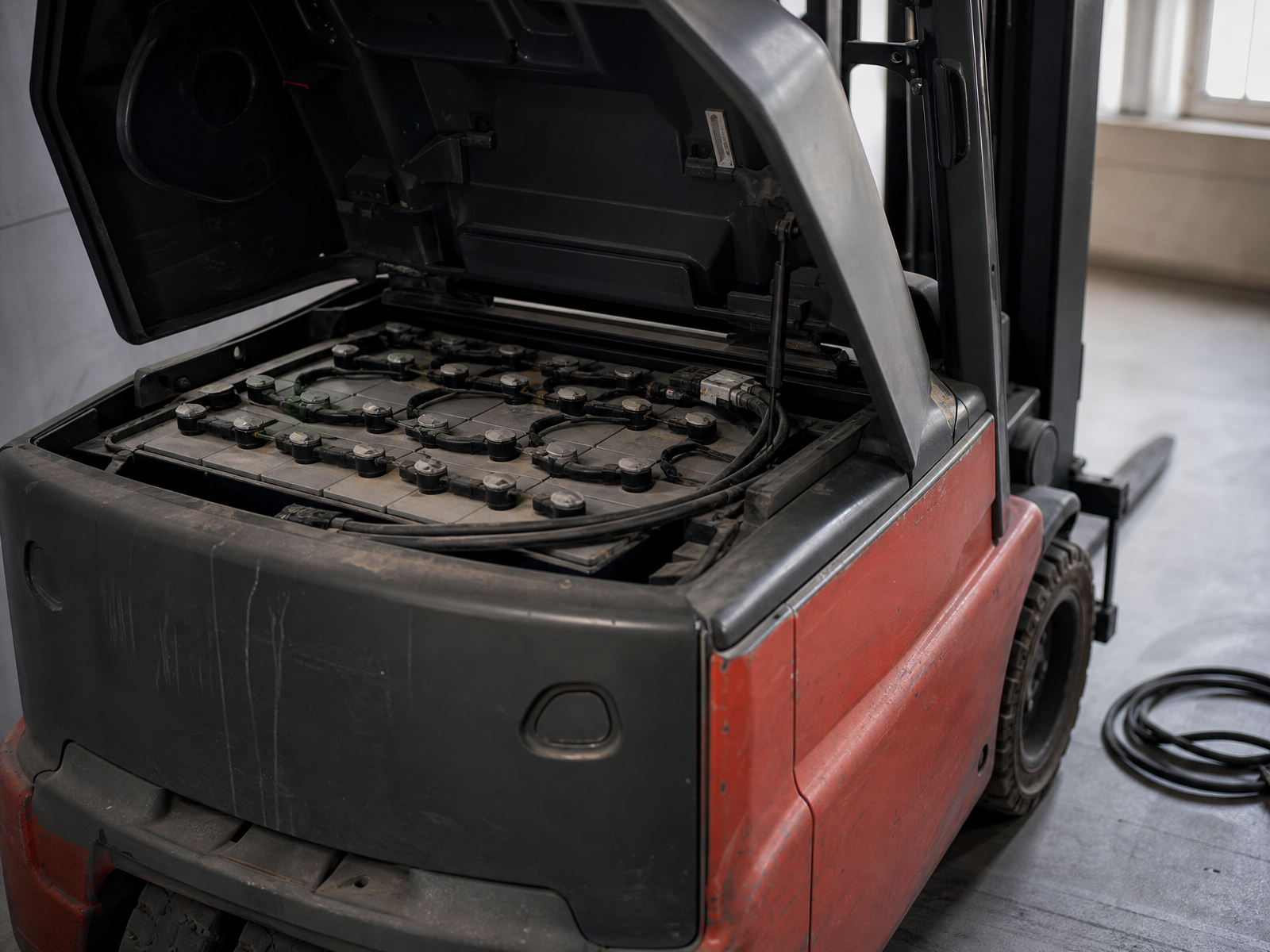
Batteries and fluids attract more rules than buyers expect, and they are the most common cause of a delayed sailing. A lead-acid battery and a lithium pack are treated differently by carriers, a diesel or LPG machine may need its fuel drained or declared, and hydraulic oil is a declared fluid in its own right. Requirements vary with carrier and route, so confirm in writing with the forwarder rather than assuming a previous shipment set the rule.
Documents most often hold up release, and the fix is knowing who supplies what and when. The commercial invoice and packing list come from the seller, the certificate of origin is issued through the relevant body in the exporting country, the bill of lading comes from the carrier, and the insurance certificate follows whoever arranged cover. Manuals, a parts catalogue and any conformity paperwork should travel with the machine. Confirm the list early, because a document produced at the last minute delays a vessel.
The timeline runs from build to delivery in stages, and each stage has its own way of slipping. Production queues behind other orders, inland transport waits for a booking, export clearance runs on its own clock, sailing schedules change, and destination clearance depends on how complete the documents are. No responsible supplier promises a door-to-door date in advance; they can promise the sequence, and which stages they control.
Costs at the destination are the ones buyers forget to budget for. Port handling and terminal charges accrue whether or not the consignment moves quickly, the broker charges per entry, inland trucking depends on distance and access, and unloading needs a machine heavy enough to lift what is inside the container. Storage accumulates if collection is late. These rates move with the market, so ask for the composition rather than a figure.
When the container is opened, the inspection is the first thing with any legal weight. Photograph the packing before unloading, check the machine against the order and the packing list, and record transit damage immediately, following our new forklift delivery acceptance checklist. Claims generally rest on evidence captured at arrival, and a note written a week later is worth considerably less.
Send the model, quantity, destination port and site access limits, and HUAYA can set out the shipping arrangement and the document list that goes with it. Reach us through the contact page before the order rather than after the container is booked. The earlier those details arrive, the fewer assumptions end up inside a quote.

Hot Products

Forklift Hydraulics: Seals, Leaks and Uptime

Forklift Telematics: What Fleet Data Is Worth Paying For

Forklift Floor Loading: What Your Slab Can Take

Explosion-Proof Forklifts: ATEX Zones and What to Specify


