

What Are the Different Types of Stackers?
30 Mar 2026
Stackers have quietly become one of the most essential pieces of warehouse equipment. Whether you’re managing a small warehouse, a busy distribution center, or a retail stockroom, stackers help lift, move, and store goods efficiently. But here’s the thing — not all stackers are the same. Choosing the wrong type can slow down operations, increase labor costs, and even create safety risks.
So, what are the different types of stackers? And how do you choose the right one?
What Is a Stacker?
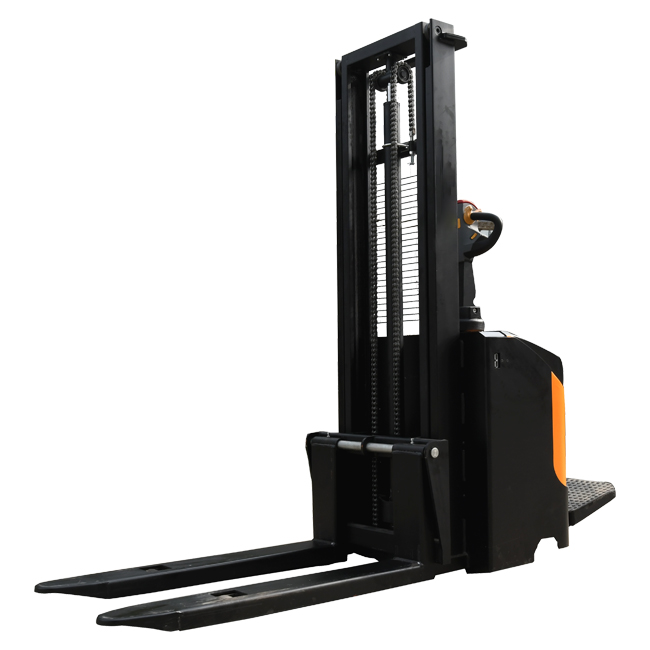
A stacker is a compact material handling machine designed to lift, stack, and transport palletized goods. It works as a middle ground between a pallet jack and a forklift. While pallet jacks only move loads at ground level, stackers can lift pallets to shelves and storage racks.
Think of a stacker as the “compact forklift” of warehouses. It’s smaller, easier to operate, and more cost-effective for many operations. Most stackers can lift loads between 900 kg and 1,800 kg, depending on the model, making them ideal for warehouses, factories, and retail environments.
Stackers are especially useful in:
- Warehouses
- Retail stockrooms
- Manufacturing facilities
- Logistics centers
- Small storage areas
Because they are compact and easy to maneuver, stackers are perfect for tight spaces where forklifts cannot operate efficiently.
How Stackers Work
Stackers operate using hydraulic systems, electric motors, or manual pumping mechanisms. The operator positions the forks under a pallet, then lifts it using the lifting mechanism. Once lifted, the load can be transported and stacked at the desired height.
Manual stackers rely on human effort, while electric stackers use battery-powered motors to lift and move goods. Electric models also reduce operator fatigue and increase productivity significantly.
Why Stackers Are Used in Warehouses
Stackers are widely used because they offer flexibility, affordability, and efficiency. They also take up less space compared to forklifts. Many businesses prefer stackers because they reduce labor costs and improve workflow.
Stackers also enhance workplace safety. Instead of manually lifting heavy loads, operators can safely lift and stack pallets using stackers.
Main Types of Stackers
There are several types of stackers available today. Each type is designed for specific tasks and working environments.
Manual Stackers
Manual stackers are the most basic type. They rely entirely on human power for lifting and movement. Operators use a pump handle to raise the forks and manually push the stacker to move loads.
Manual stackers typically handle 500 kg to 1,500 kg loads and lift heights between 1.6 to 3 meters, making them suitable for light-duty tasks.
Advantages of Manual Stackers
Manual stackers are popular for small businesses because they are affordable and easy to maintain. They require no battery charging and minimal maintenance.
They are also compact and easy to maneuver in tight spaces. This makes them perfect for small warehouses and retail shops.
Disadvantages of Manual Stackers
Manual stackers require physical effort, which can lead to operator fatigue. They are also slower and less efficient for high-volume operations.
Manual stackers are best suited for:
- Small warehouses
- Light-duty operations
- Low-frequency lifting tasks
Semi-Electric Stackers
Semi-electric stackers combine manual movement with electric lifting. These stackers provide lifting assistance while still requiring manual pushing.
These models are ideal for businesses that need lifting support but do not require fully electric machines. Semi-electric stackers are cost-effective and versatile.
They are commonly used in:
- Small warehouses
- Retail environments
- Workshops
Fully Electric Stackers
Fully electric stackers are powered by batteries and electric motors. They handle both lifting and movement automatically.
Electric stackers typically handle 1,000 kg to 2,000 kg loads and can lift up to 5 meters or higher depending on the model.
These stackers are ideal for:
- High-volume warehouses
- Distribution centers
- Manufacturing plants
Electric stackers reduce labor fatigue and increase productivity significantly.
Walkie Stackers
Walkie stackers are operated by a walking operator. They are compact and ideal for narrow aisles.
These stackers are commonly used in warehouses with limited space. Walkie stackers are easy to operate and provide excellent maneuverability.
Ride-On Stackers
Ride-on stackers allow operators to stand or sit while operating. These stackers are designed for long-distance transportation.
They are commonly used in large warehouses and distribution centers.
Counterbalance Stackers
Counterbalance stackers operate like forklifts. They do not require support legs, making them ideal for handling different pallet types.
These stackers are highly flexible and easy to operate.
Straddle Stackers
Straddle stackers have adjustable legs that straddle pallets. These stackers are stable and versatile.
They are commonly used in warehouses with different pallet sizes.
Reach Stackers
Reach stackers are designed for narrow aisles and high stacking. They extend forward to reach pallets.
These stackers are ideal for high-density warehouses.
Comparison Table of Stacker Types
| Type | Power Source | Capacity | Best For |
|---|---|---|---|
| Manual Stacker | Manual | Light | Small warehouses |
| Semi-Electric | Hybrid | Medium | Retail & small warehouses |
| Electric Stacker | Battery | Heavy | Large warehouses |
| Walkie Stacker | Electric | Medium | Narrow aisles |
| Ride-On Stacker | Electric | Heavy | Long distances |
| Counterbalance | Electric | Heavy | Flexible use |
| Straddle Stacker | Electric | Medium | Different pallets |
| Reach Stacker | Electric | Heavy | High stacking |
How to Choose the Right Stacker
Choosing the right stacker depends on several factors.
Load Capacity
Consider how heavy your loads are. If you’re lifting heavy pallets, choose an electric stacker.
Lift Height
If you need to stack high racks, choose reach stackers or electric stackers.
Working Environment
Consider aisle width, warehouse size, and usage frequency.
Stackers vs Forklifts
Stackers are smaller and more affordable than forklifts. However, forklifts handle heavier loads and outdoor operations.
Stackers are best for indoor use and tight spaces.
Industries That Use Stackers
Stackers are widely used in:
- Warehousing
- Manufacturing
- Logistics
- Retail
- Food industry
Benefits of Using Stackers
Stackers offer many benefits:
- Increased productivity
- Reduced labor costs
- Improved safety
- Space efficiency
Stackers are essential equipment for modern warehouses. Understanding the different types helps you choose the right one for your needs. Whether you need manual stackers for light-duty tasks or electric stackers for heavy operations, there’s a stacker for every business.
Choosing the right stacker improves productivity, reduces costs, and enhances safety.
FAQs
1. What is the most common type of stacker?
Electric stackers are the most common due to efficiency and ease of use.
2. What is the difference between stacker and forklift?
Stackers are smaller and used indoors, while forklifts handle heavier loads.
3. How high can a stacker lift?
Most stackers lift between 1.6 meters to 5 meters.
4. Are stackers safe?
Yes, stackers improve safety compared to manual lifting.
5. Which stacker is best for small warehouses?
Manual or semi-electric stackers are best for small warehouses.
Hot Products
What Is Load Center in Forklift?
What Type of Forklift Is Best for Indoor Use?
Is a Forklift Considered Heavy Equipment?
How to Operate a Stand–Up Forklift?